What Citrus Greening Means for the Inland Empire: A Policy Explainer
Huanglongbing has spread into Riverside and San Bernardino counties. This explainer covers the disease, the regulatory framework, and what quarantine means for residential and commercial citrus.
A disease with no cure has been spreading through Southern California’s citrus counties for more than a decade, and as of 2025 it has established a presence throughout much of the Inland Empire. Huanglongbing — commonly called HLB or citrus greening — is the most destructive citrus disease in recorded agricultural history. It has collapsed commercial citrus industries in Florida, Brazil, and across much of Asia. Understanding what the disease is, how it spreads, and what the California regulatory framework requires is not a matter of academic interest for Riverside and San Bernardino County residents. It is a practical necessity.
The Disease and Its Vector
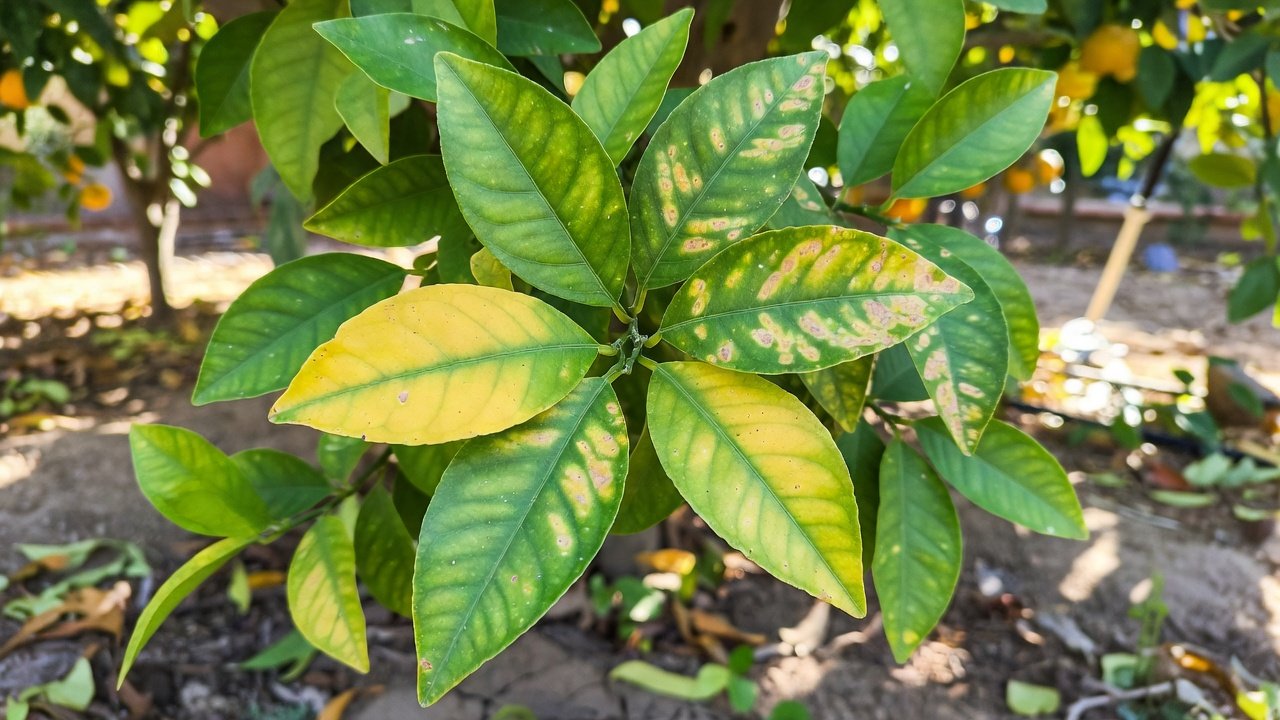
Huanglongbing is caused by a bacterium — Candidatus Liberibacter asiaticus (CLas) — that lives and reproduces inside a citrus tree’s phloem, the vascular tissue that moves sugars from leaves to roots. An infected tree cannot be cured. The bacterium disrupts phloem function, causing characteristic symptoms: blotchy, mottled yellowing on leaves (the “greening” the name refers to), small and lopsided fruit that tastes bitter and fails to ripen properly, and progressive decline that kills the tree within years. Because symptoms can take months or years to appear after initial infection, infected trees may spread the disease before showing visible signs.
The vector — the insect that carries the bacterium from tree to tree — is the Asian citrus psyllid (Diaphorina citri), a small, waxy-gray insect roughly two to three millimeters long. Psyllids feed on young citrus flush (new leaf growth), and when they feed on an HLB-infected tree, they can acquire the bacterium and transmit it to healthy trees during subsequent feeding. The California Department of Food and Agriculture’s Citrus Pest and Disease Prevention Division (CPDPD) describes HLB as “one of the most serious plant diseases in the world.”
The Asian citrus psyllid was first detected in California in San Diego County in 2008. Its spread through Southern California counties was documented in subsequent years, with detections in Los Angeles, Orange, Riverside, and San Bernardino counties following through the early 2010s.
How HLB Reached the Inland Empire
The first confirmed HLB-positive tree in California was found in March 2012 in a residential yard in Los Angeles County. This initial detection was in a home garden — a pattern that has defined the disease’s California spread. HLB’s entry and propagation in California has been primarily through residential citrus trees, backyard groves, and ornamental plantings, not through commercial groves, which operate under more intensive monitoring and pest-management protocols.
In July 2017, HLB was detected in Riverside County for the first time, in the vicinity of the Interstate 215 and 91 freeway interchange — a location that placed it well within the Inland Empire’s urban-suburban residential fabric. From that initial Riverside detection, the disease expanded. By the early 2020s, both Riverside and San Bernardino counties were included in USDA APHIS and CDFA quarantine designations.
The expansions have continued. APHIS reported in August 2025 that the quarantined area in the Perris area of Riverside County had expanded by 33 square miles, concurrent with a CDFA intrastate quarantine established in August 2025. A separate 2025 expansion covered 88 square miles in the Rancho Cucamonga and San Bernardino areas of San Bernardino County. As of December 2025, APHIS data indicated more than 3,100 square miles of quarantined territory in Southern California, representing approximately two million acres.
The Regulatory Framework
California’s response to HLB is built on a multi-agency structure. The CDFA’s Citrus Pest and Disease Prevention Division administers the state program, operating under authority established through the Citrus Pest and Disease Prevention Program (CPDPP), created in 2009. The USDA’s Animal and Plant Health Inspection Service (APHIS) operates in parallel, establishing federal quarantine zones that overlay state designations. County agricultural commissioners in Riverside and San Bernardino counties provide local enforcement and survey capacity.
The legal instrument that shapes daily behavior in affected areas is the quarantine boundary. When HLB is confirmed, CDFA and APHIS establish a quarantine perimeter — typically five miles in radius from the infected tree — within which specific restrictions apply to the movement of citrus plant material and, to a lesser extent, fruit.
What Quarantine Means for Residents
Within an HLB quarantine zone, residents may not move citrus plant material — branches, leaves, stems, potted trees — out of the quarantine boundary. This restriction applies regardless of whether the material shows symptoms. The bacterium can be present in material that appears healthy, and moving infected material is the mechanism by which the disease jumps geographic boundaries.
Fruit, under California’s framework, is treated differently from plant material. Thoroughly washed fruit with all leaves and stems removed may be moved within a quarantine area and, under specific conditions, shared in small quantities. The washing requirement exists because psyllid eggs and nymphs can hitchhike on fruit surfaces; removing foliage and washing eliminates that vector risk.
If a backyard tree tests positive for HLB, CDFA requires its removal. Removal is performed at no cost to the homeowner. The rationale is containment: each infected tree is a potential psyllid inoculation source for surrounding trees, and removal removes that source from the landscape.
UC IPM (University of California Statewide Integrated Pest Management Program) maintains current guidance for homeowners and landscape managers on identifying psyllid infestations, reporting suspect trees, and managing residential citrus within quarantine areas.
Commercial Grower Obligations
Commercial citrus operations in HLB quarantine areas face a more complex compliance environment. The CDFA’s Action Plan for Asian Citrus Psyllid and Huanglongbing, developed in coordination with the Citrus Pest and Disease Prevention Committee (a grower-funded body), outlines best practices that growers in quarantine areas are expected to implement. These include enhanced psyllid monitoring using yellow sticky traps, periodic foliar inspections by licensed pest control advisers, and restrictions on the movement of bulk citrus across quarantine boundaries without compliance documentation.
The cost burden on commercial growers has been substantial. Psyllid management — through insecticide applications, biological control releases, and monitoring — adds per-acre costs that growers in uninfested zones do not carry. California Citrus Mutual, the primary commercial grower advocacy organization, has documented these additional costs in communications with state and federal regulators. The Citrus Insider, which covers California commercial citrus policy, has reported on the ongoing negotiations between growers and CDFA over the scope and funding of the compliance framework.
Research and the No-Cure Problem
The defining challenge of HLB management is that no cure exists. A tree infected with CLas will die. The research apparatus targeting this problem is substantial. UC Riverside’s College of Natural and Agricultural Sciences has active research programs on CLas biology, psyllid population dynamics, and potential therapeutic approaches. The National Science Foundation and USDA have funded multi-institutional research consortia working on gene editing, antimicrobial peptides, and thermotherapy as potential interventions, but none has produced a commercially deployable treatment as of 2025.
Biocontrol — releasing natural psyllid predators and parasitoids — is one component of the CDFA’s long-term suppression strategy. Tamarixia radiata, a parasitic wasp that lays eggs inside psyllid nymphs, has been reared and released across Southern California in CDFA’s biocontrol program. The approach does not eliminate psyllid populations but can reduce them below economically damaging thresholds, buying time for infected areas while research continues. The CDFA biocontrol page tracks release locations and program data.
The Inland Empire’s Particular Stakes
The Inland Empire’s relationship to citrus is not incidental. The California Citrus State Historic Park in Riverside preserves the physical infrastructure — the packinghouses, the groves, the irrigation systems — of an industry that shaped the entire region’s development from the 1870s forward. Riverside was the site of the first Washington Navel orange tree planted from USDA budwood in 1873, and the city’s identity is bound to that history in ways that architecture, street names, and civic institutions continue to express.
The spread of HLB into Riverside and San Bernardino counties means that the residential and heritage citrus in those counties — the backyard trees, the historic grove remnants, the demonstration plantings at institutions including UC Riverside’s Citrus Variety Collection — is now at elevated risk. The Citrus Variety Collection, which holds more than 1,000 accessions representing the most complete assemblage of citrus genetic diversity in the Western Hemisphere, has implemented protective protocols including enhanced psyllid monitoring, screened enclosures for particularly vulnerable accessions, and accelerated propagation of at-risk material into secure off-site storage.
What the policy framework is attempting to do in the Inland Empire is buy time: slow the spread of an incurable disease while research works toward a therapy that does not yet exist, and preserve commercial and heritage citrus against an insect vector that has already demonstrated it can move faster than regulatory response. Whether that strategy will succeed is a question the research community has not yet been able to answer.